Hi Guys!
Today in class we had to task to research a kiwi legend, John Minto.
Here is my work on John Minto:
BYE!
I am a student at in Uru Mānuka. In 2020 I was a year 9 and in 2021 I will be a year 10. This is a place where I will be able to share my learning with you. Please note....some work won't be edited - just my first drafts, so there may be some surface errors. I would love your feedback, comments, thoughts and ideas.
Hi Guys!
Today in class we had to task to research a kiwi legend, John Minto.
Here is my work on John Minto:
BYE!
The Power of one is a great film that is very deep and powerful. John G Avilson brilliantly
showed us what it was like for South Africans throughout the year leading up to, during, and after
Apartheid. Lighting, Facial expressions, Long shots, and props are only a sample of film aspected
geniously used to show meaning and add depth to the film.
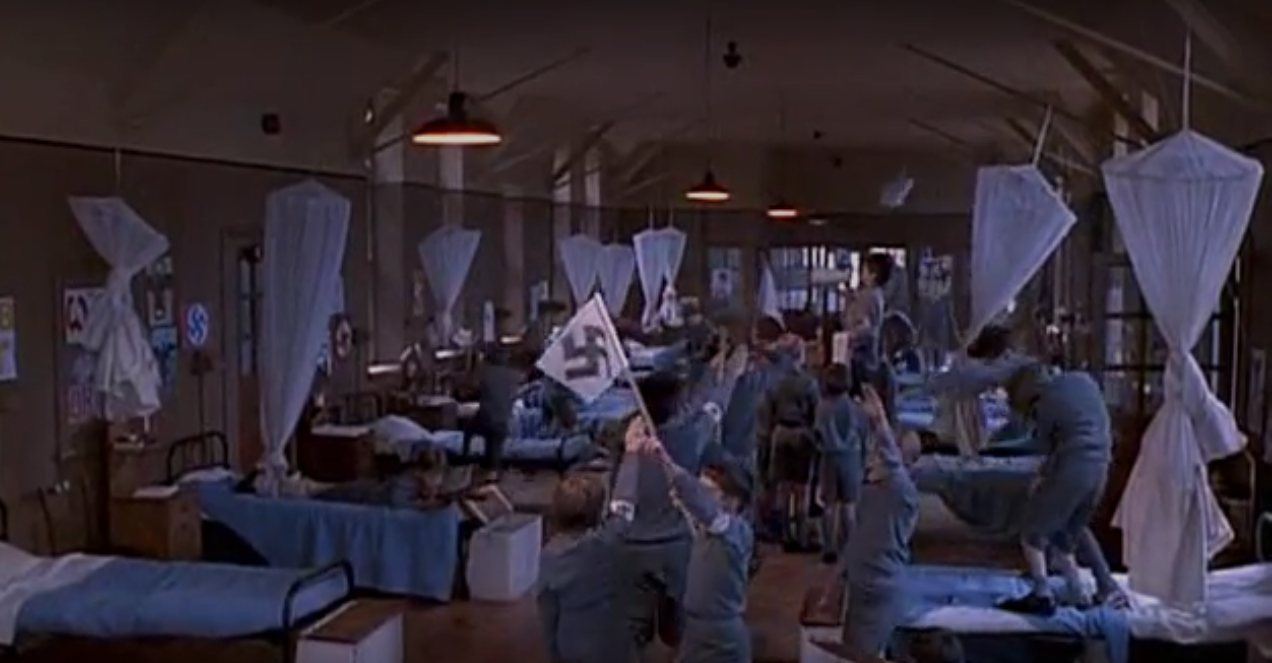
In this shot of the hang-em-up scene in the power of one lighting was effectively used. For instance
when the door is opened by the owner of the school. the lighting used makes the scene more dramatic
and gives power. This shows who in the scene has power and who brings fear into the characters that
they are playing. The director did this to bring power and make the scene show what the order of power
is and who controls who. This combined with the body language used when the school owner walks in
makes a great display of order. This aspect can be compared to symbolism because of the fear the nazi
symbol gives off and the power it produces.
Expertly used facial expressions are implemented well in the hang-em-up scene. For instance, after Batha,
the bully kills P.K.’s chicken his face shows sadness, and after P.K. pushes Batha out of frustration his
facial expressions show pain after Batha falls onto a flag that sticks in his bottom. This shows that facial
expressions are needed to bring out a more realistic feel so the audience can get more involved and be
able to relate to the pain that is brought through in the scene. This was done to help the audience
understand the pain and the feelings that the characters felt throughout the scene and allows the
audience to show empathy. This worked well with props so we could get a real feel for the scene and
why the characters made those facial expressions. This aspect can be compared to makeup because it
shows the physical outcomes of what happened and helps to show who the characters may be feeling
when something is happening.
Long shots are utilized skillfully in the hang-em-up scene of the power of one. We see this when P.K.
first enters the room where you can see everyone and everything. This shows what everyone is doing
and how they are celebrating after they find out what Hitler is trying to do to take back the land which he
thinks is his. This was done to show everyone’s reaction and to show us if they liked what was happening
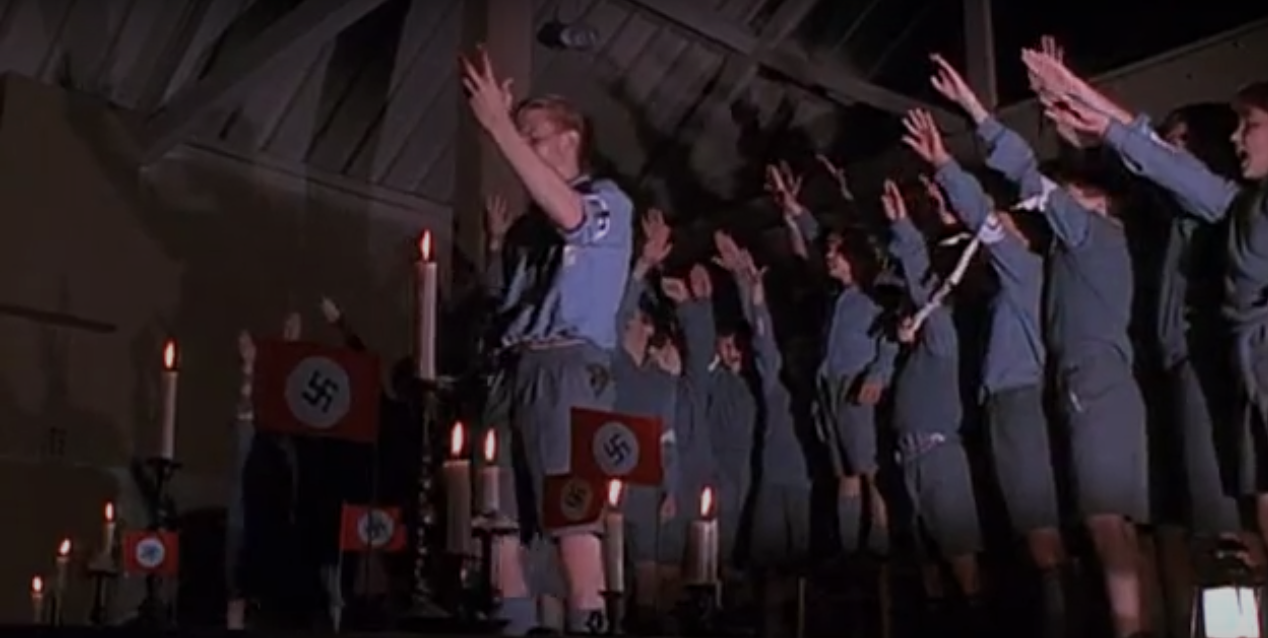
or not. This worked well with the symbolism used that shows nazi logos that were put everywhere like on
walls, flags, etc. This aspect can be compared to mid shots as in this scene they are also used to show
reactions on people and the feeling and expressions being produced.
Props are used effectively in the hang-em-up scene. For example, Props were used to show more depth
in the scene as the scene would be pretty basic and boring without them as they are huge in some parts
of the scene. This makes the audience understand that the props used are all important and help make
the scene relatable or easier to understand what the director is trying to do. This was done to show us in
full effect the length that the characters were going through to support the nazis and bully P.K. an
Englishmen. This worked well with the set design to help bring depth to the film and do similar things to
what the props are doing. This aspect can be contrasted with the set design because they both bring out
the same things and are both physical objects but the props are used for many different that isn’t just for
show. These both work well together and are great at showing more in the film and how genius the director
is.
John G Avilson shows his amazing skills in producing the 1992 film The Power of One. He shows his great
ability to use film aspects especially Lighting, Facial expressions, Long shots, and props. Many people
should watch this film as there are many things that can be taken from it that could help and improve
people’s lives as the film show us things like human rights and the power that one person can have on
the world.
Expertly used, lighting was is implemented well in the workout scene. We see this when the mouse is working out the lighting is centered around what is happening. This shows that they are trying to get us to focus on the center of the screen where they have everything happening. This was done to show that their product gives you superhuman powers like super strength so people are more inclined to buy the product being sold. This worked well with the mice trying to get the cheese and the fact that the mouse comes and is strong enough to break out of the trap after eating the cheese. This aspect can be compared with props because when the props used to help how the same things and the mousetrap was used to show how strong the mouse had gotten after eating the cheese.
Props are utilized skillfully in the mouse finds the cheese scene. For instance, when the mouse came out of the wall and found the cheese the surrounding props helped show what was happening.
In the prison scene in the power of one camera angles are used to show fear in the prisoners like Geel Piet. In this scene they use camera angles that make the guard look big and scary, this shot also shows how the guards look down onto the prisoners. This was used in this scene because in the prison only the white people are treated well. This shows that the guards thought that the black people deserved to be punished for being black and that they can control them. The low angle combined with the lighting makes the guards look big and strong and the prisoners look scared and afraid. This can be linked with the performance scene when the prisoners are getting looked down on and the guards and made to be big and better.
In the performance scene in the Power Of One lighting is used to show how the prisoners were afraid. In the scene, the lighting used was a dark color in the night which helped to make a dark and scary atmosphere. This helps to foreshadow what is about to happen to Geel Piet a native South African. The purpose of this was to make the atmosphere scarier and to show that Geel Piet was about to have something happen to him. This makes the audience feel a connection to Geel Piet and makes what is going to happen to him sadder. This works well with the tone of voice used by the actors to show fear and sadness in Geel Piet's voice. This can be compared with the boxing scene when P.k. fights Gideon Duma because in this scene the lighting and living conditions they were given were similar to the prison and the performance scene.
In the boxing scene when P.K. and Gideon Duma were boxing to settle something, long shots were used effectively. In this scene, the long shot was used to show the native South Africans who were surrounding the boxing ring to see what was about to happen. This was used to show
S: In the concert scene, we hear native South Africans sing a song in their language that was written by P.K. the main character.
E: The joy was lead by a native singer and the rest of the tribes sung harmoniously , whilst Doc played the piano and P.K. composed the music.
X: The song made the audience feel hopeful and it was moving. This was because P.K. - through the singing - brought the tribes together.
X: The purpose of this was to help show that P.K. was the mythical figure of the Rain-Maker.
X; The singing combined with long shots also shows the harmony of the natives as they are all sitting nicely together.
Y: The singing can be compared to the singing at the boxing match, as the now freed natives sing to P.K. to show him they think he is the Rain-Maker. Both lots of singing give a sense of hope for the native South Africans.
Final paragraph:
In the concert scene, we hear native South Africans sing a song in their language that was written by P.K. the main character. The joy was lead by a native singer and the rest of the tribes sung harmoniously, whilst Doc played the piano and P.K. composed the music. The song made the audience feel hopeful and it was moving. This was because P.K. - through the singing - brought the tribes together. The purpose of this was to help show that P.K. was the mythical figure of the Rain-Maker. The singing combined with long shots also shows the harmony of the natives as they are all sitting nicely together. The singing can be compared to the singing at the boxing match, as the now freed natives sing to P.K. to show him they think he is the Rain-Maker. Both lots of singing give a sense of hope for the native South Africans.